
 By
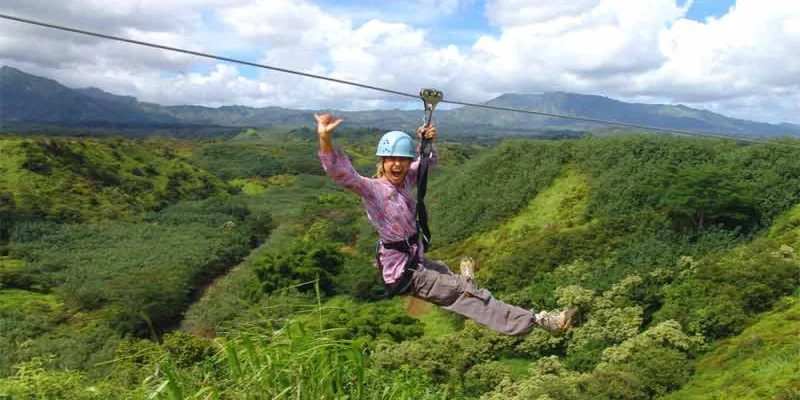
Eight lines. Three and a half hours. One half mile of cable at the top of the course. Most people book a Kauai zipline trip expecting a ride, and what they get is closer to a field course on gravity, local history, and their own posture.
I want to talk about the second thing, because it is the part nobody plans for. A well-built course is sequenced. Line one is short and almost boring on purpose. By line five you are flying over old sugar plantation land with a view that justifies the price of the ticket, and by line eight you understand why the guides made you stand in that practice pen first. If you are weighing options on the south shore, the Best zipline attraction in Koloa runs this exact shape: eight lines, tandem gear for the nervous, and three of the longest lines on the island built into a single tour.
So this is not another list of reasons to go. It is a breakdown of what the course geometry actually does to your day, how to read a course before you book it, and how to show up prepared instead of borrowing shoes at check-in.
Why a course is built long-to-short and back again
Line order is not random, and it is not sized by how dramatic the brochure photo looks. Operators front-load the easy stuff. Your first zip on a professional course runs low, short, and slow, which lets a guide watch how you sit in the harness and whether you grab the cable instead of the handlebar.
Then the course builds. The middle lines carry the height. The finale is usually the longest cable with the biggest view, because that is the memory you will describe at dinner. By then you have already made your mistakes on a line nobody photographs.
Here is the part I would argue with an operator about: three and a half hours sounds long for eight rides, and on paper it is. In practice the time goes to gearing up, ground school, shuffling between platforms, and waiting for the group to reassemble. The flying portion is a fraction of it. Know that going in and the pacing will not annoy you.
What the plantation land underneath changes about your ride
Kauai grows things, and the south shore in particular was built on agriculture before it was built on tourism. Flying over old cane land gives you a read on the island you cannot get from a beach chair. The rows, the drainage, the tree lines, and the way the wind moves across open fields all show up in how your trolley behaves.
Open ground means wind, and wind is the variable that matters most in ziplining. A course routed over protected gulches feels different from one crossing a wide field. Roughly a fifth of Kauai’s land is protected in some form, according to the National Park Service, which is why the island’s interior looks the way it does from the air.
None of that is trivia. It tells you what kind of course you are booking. Ridge and valley lines are more sheltered. Field crossings are more exposed and therefore more variable, which is exactly why operators run rain or shine and let the guide make the call on a given departure.
How to size up a zipline course before you pay
You can learn almost everything you need from a course page in about four minutes, if you know which lines to read. And if you compare three operators on the same island, you will start seeing the same vocabulary, which makes the differences easy to spot.
- Number of lines and the longest one. Eight lines with a half mile at the top is a different product from five short lines, even if both cost about the same.
- Duration including check-in. Ask whether the quoted hours start at the desk or on the platform.
- Braking system. Handlebar pulleys and guide-controlled braking mean you are not responsible for stopping yourself. That is the setup you want if you have never zipped.
- Ground school. A practice line before the real ones is a quality signal, not a formality.
- Age and body limits. Most courses draw a hard floor at seven years old and turn away pregnancy and recent surgeries. Read the restrictions before you build the itinerary around it.
Most visitors heading to the south shore are coming from a handful of places. The University of Hawaii keeps the islands’ travel and visitor research in one place, and you will notice the same pattern every season: the busiest days cluster around weekends and cruise arrivals. Book the morning slot and you skip most of the queue.
A concrete example of why this matters. A friend booked a course on the north shore for a Wednesday, drove from Poipu, hit a rain squall on the pass, and spent forty minutes of his vacation watching the windshield instead of the coastline. Same island, completely different day. Your lodging and your course should be within a short drive of each other, or you should treat the drive as its own excursion.
The Eight-Line Check: a two-minute way to compare courses
I use a simple scoring pass when I am comparing adventure operators, and it applies here without modification. Score each course from zero to two on five items, then total it. Eight or above and you are looking at a serious operation.
| Check | Score 2 if | Score 0 if |
|---|---|---|
| Cable length | At least one line is a genuine distance ride | Everything is short |
| Training | Ground school is required | You are briefed at the platform and sent |
| Harness system | Tandem gear or guide braking | You brake with your hand |
| Restrictions published | Age, weight, and medical limits are on the page | You find out at check-in |
| Cancellation terms | Stated clearly with a window | Vague or absent |
The harness row is the one I care about most and the one shoppers skip. Handlebar pulleys exist so that a first-timer can enjoy the view instead of managing the trolley. If a course does not offer them, it is telling you something about who it expects to show up.
What to actually wear, and why it matters more than you think
Zipline operators write packing lists for legal reasons and practical ones, and the practical ones are usually hiding in plain sight. You will be in a harness that puts pressure on your upper legs. You will walk on uneven ground between platforms. You will cross places with biting insects.
The list that actually works: closed toe shoes with support, long shorts or pants, a fitted shirt you will not lose wind to, sunscreen, bug spray, and a camera you can secure. That last point matters because most operators, including this one, will not cover lost or damaged items.
Leave the platform sneakers at home, and skip Crocs and water shoes. Anything with a loose sole is a liability on a hillside stair. And no flip flops. Not a suggestion.
One more practical note on timing. Weather on Kauai moves, and outdoor operators work in it. The trade winds that make the south shore comfortable most of the year are the same pattern the National Oceanic and Atmospheric Administration tracks across the islands, and the showers that pass through tend to leave as fast as they arrive. Pack a light layer and stop refreshing the forecast every hour.
Rain or shine, and why you should trust the operator on that call
A course running in light rain is still a course. A course running in high wind is not, and the guide is the only person on the property who can make that judgment. When a tour page says rain or shine, that is a promise about the schedule, not a claim that every departure flies.
Ask one question when you book: what happens if the weather shuts the course down mid-tour? A good operator answers that in one sentence. If they get vague, that is your answer.
The same logic applies to the cancellation window. A forty-eight hour policy that drops to twenty-four with trip protection is standard, and it exists because the operator is holding a seat you might not fill. Read it. It is the cheapest insurance you will buy all week.
What to do with all of this before you book
The course is the product. Everything around it, the drive, the check-in time, the shoes you packed, the slot you picked on a Saturday, decides whether you enjoy the product. So the plan is simple. Book a morning slot, choose a course near where you are sleeping, score the operator with the Five Point Eight check instead of trusting a star rating, and pack like you are going on a short hike rather than to a pool.
Do that and the tour becomes the easy part of your day. Which is the whole point. You are there for the half mile of cable and the view at the end of it, and everything else you read today exists so that nothing gets in the way of those three seconds when you let go of the platform.
So the real question is not whether you will enjoy a zipline course. It is whether you will pick one that leaves you time for the rest of your trip once you are done. Which course is closest to where you are staying, and what is stopping you from calling this week?






Comments