
 By
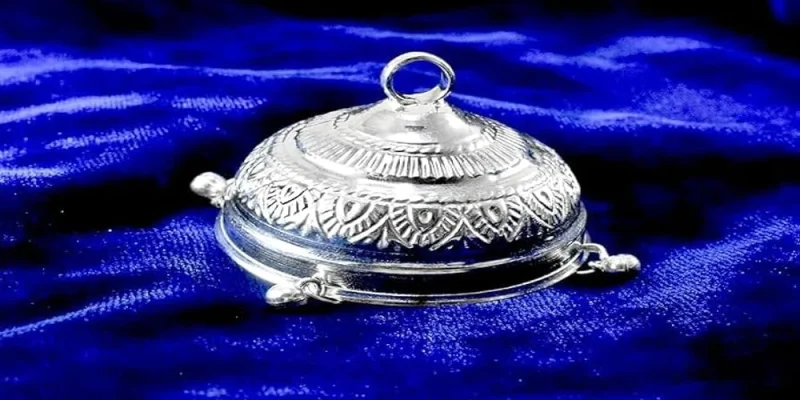
In the tradition of temple worship and religious ceremony across India, the chatra , a sacred canopy or ceremonial umbrella , holds a significance that goes far beyond its physical form. Placed above deity idols, used in religious processions, and displayed during festivals and auspicious occasions, the chatra represents divine protection, royal honour, and auspiciousness in the Hindu devotional tradition. A silver chatra for temple use combines this sacred symbolism with the purity and lustre of silver, creating an offering that carries both spiritual meaning and artisanal craftsmanship. This guide explores the significance of the silver chatra, the varieties available, and what to consider when selecting one for temple or home worship use.
What Is a Chatra in Hindu Tradition?
The word chatra (also written chattar or chhatra) means umbrella or canopy in Sanskrit. In the context of temple worship and royal ceremony, the chatra is a symbol of the highest honour , a canopy held above or placed over that which is considered most sacred or most exalted. In temples, the chatra is placed above the principal deity’s idol or palanquin, signifying the deity’s sovereign status and divine protection over devotees.
The tradition of the chatra as a symbol of honour and protection is deeply embedded in Indian religious and royal iconography. Ancient temple sculptures and manuscript illustrations depict deities, rulers, and sages beneath the canopy of a chatra. In processional worship , during rath yatras, palkhi processions, and festival parades , the chatra is carried above the deity’s image or palanquin, visibly marking the sacred space through which the procession moves.
Silver Chatra for Ganpati and Other Deities
The silver chatra for Ganpati is among the most widely offered forms of this sacred object in Maharashtra and across communities that observe Ganesh Chaturthi as a significant festival. Offering a silver chatra to Ganpati is considered an act of profound devotion and is often made as a fulfilment of a vow (mannat) or as a mark of gratitude for a blessing received. The silver’s purity is seen as appropriate for the offering to a deity, and the craftsmanship of the chatra reflects the devotee’s intent to honour the deity with the finest possible gift.
Silver chatras are also offered to Lord Vishnu, Lord Shiva, Goddess Lakshmi, Goddess Durga, and the principal deity of family or community temples across India. In South Indian temples, the chatra , often referred to as a tirukkuda or kodai , is a standard element of the abhisheka and alankara ritual, placed above the deity’s idol during major worship ceremonies.
Silver Umbrella for God: Forms and Varieties
A silver umbrella for god is available in a range of forms, sizes, and levels of ornamentation, from simple functional designs appropriate for regular temple use to elaborately crafted pieces featuring engraved devotional motifs, embossed floral patterns, and decorative fringes intended for festival and special occasion display.
The most common forms include the flat disc chatra, which presents a circular canopy face that may be plain, engraved, or embossed; the tiered chatra, which features multiple concentric canopy levels in a traditional parasol form; and the decorative processional chatra, which is designed for carrying in processions and features a handle or pole fitting alongside the canopy.
Sizes range from miniature chatras of ten to fifteen centimetres intended for home shrine use to large processional pieces of sixty centimetres or more designed for temple and festival use. The weight of the piece, which determines the silver content and therefore the material cost, increases significantly with size, and buyers should confirm both the dimensions and the silver content when evaluating pieces at different price points.
Silver Chattar for God: Craftsmanship and Quality
The quality of a silver chattar for god is determined by both the purity of the silver used and the craftsmanship of the making. Sterling silver (92.5 per cent pure silver, marked 925) and fine silver (99.9 per cent pure, marked 999) are the most commonly used grades for religious silverware in India. Fine silver is softer and more susceptible to deformation under handling, making it more appropriate for display pieces than for items that are regularly handled, moved, or used in water-based rituals. Sterling silver’s greater hardness makes it better suited for functional temple pieces that see regular use.
Craftsmanship standards vary significantly across producers. Hand-engraved motifs, hand-embossed relief work, and traditional filigree detailing represent higher levels of artisanal skill than machine-pressed or cast pieces. For significant religious gifts or temple installations, understanding the making process , whether the piece is handcrafted or machine-made, and where the artisans are based and trained , helps buyers evaluate the authenticity and quality of what these are purchasing.
Silver Chatra for Temple: Selection Considerations
When selecting a silver chatra for temple installation or donation, several considerations help ensure the piece is appropriate for its intended use:
- Size relative to the deity’s idol: The chatra should be proportionate to the idol above which it will be placed. A chatra that is too small appears decoratively incongruous; one that is too large may be structurally difficult to position or support
- Fixing method: Temple chatras may be fixed permanently above the sanctum, suspended from the ceiling, or placed on a stand. Confirming the intended placement method before purchasing ensures the piece has the appropriate mounting or hanging provision
- Ritual compatibility: Some rituals involve water, milk, or other liquids being poured over the idol and chatra. Sterling silver is more resistant to surface staining from ritual use than lower-grade alloys; pieces intended for regular abhisheka use should be specified accordingly
- Hallmarking: Bureau of Indian Standards hallmarked silver carries a certification of purity that unverified pieces do not. For significant purchases, selecting hallmarked silver provides assurance of the metal’s silver content
Antique Temple Jewellery and Ritual Silver: The Broader Context
The silver chatra sits within a broader tradition of antique temple jewellery and sacred metalwork that encompasses necklaces, crowns, armlets, anklets, and decorative pieces made for the adornment of temple deities. This tradition of deity adornment , known as alankara , is central to devotional practice in many Hindu traditions, with the deity’s idol dressed, ornamented, and honoured with the finest materials available to the community.
Contemporary artisans working in this tradition draw on design vocabularies that have been developed over centuries of temple metalwork, adapting traditional motifs and techniques to current production methods and materials while maintaining the visual language that devotees recognise and associate with sacred objects. For collectors and devotees who value this continuity, understanding the source and background of a piece , the region, the making tradition, and the artisan community , adds a dimension of meaning to the object that its material value alone does not capture.








Comments