
 By
By 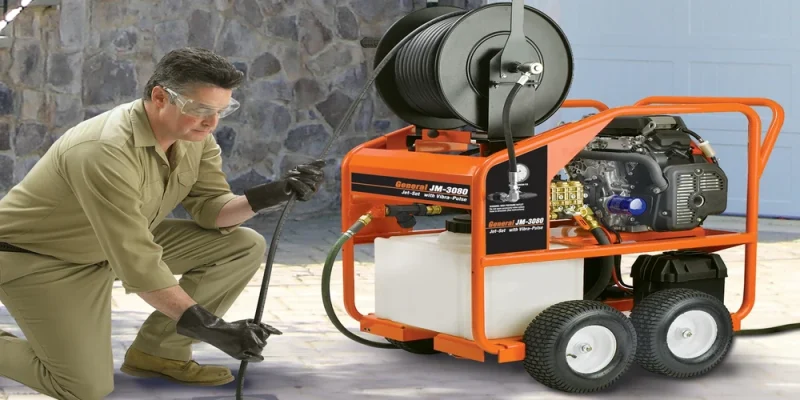
A slow tub in a Brandon ranch house usually gets one of two treatments. Someone feeds a steel cable down the line, or someone sends water through it at a pressure strong enough to scrub a pipe wall bare. Both get called drain cleaning, and both clear the backup sitting in front of you. What they leave behind inside the pipe is where they part ways, and in the ground around Jackson that difference matters more than most homeowners realize.
Around Rankin and Madison counties, Anglin Plumbing Service runs both tools out of its Brandon base, along with sewer repair and fixture work, for houses scattered from Flowood and Pearl over into Jackson. Having both on the truck is handy. Knowing which one a particular line actually needs is the harder call, and that’s what the rest of this piece works through.
Two Machines That Think Differently
A drain cable, or auger, is a coiled steel line spun by a motor. The head on the end might be a spearpoint, a corkscrew or a toothed cutter, and it does one job well. It punches through whatever is blocking the pipe. A wad of wipes, a toddler’s toy, a fist of roots near the cleanout, all of these give way to a cable quickly.
The catch is that a cable bores a hole roughly the width of its own head. If the pipe is four inches across and the cutter is three, the outer inch of buildup stays put. Water flows again, everyone feels relieved, and the same grease ring or root fringe starts catching debris the following week.
A water jet works from the opposite direction. Its hose ends in a nozzle with small openings pointed backward and one or two aimed forward. The rear jets drive the hose up the line while the forward stream breaks the blockage apart. Because water hits the full circle of the pipe, the walls come out clean rather than simply cored through, and the loosened debris gets flushed downstream instead of sitting in place.
The Ground Here Refuses to Sit Still
Most drain advice is written as if pipes rest in stable dirt. Central Mississippi doesn’t offer that luxury. The Jackson metro sits directly on an outcrop of Yazoo clay, a highly plastic soil that researchers studying the region describe as having very high shrink and swell potential, driven largely by its montmorillonite content.
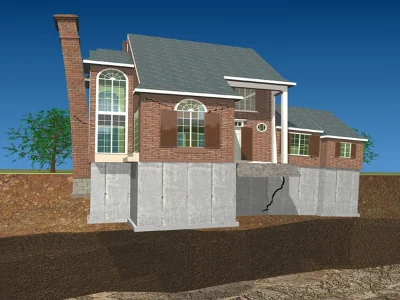
In plain terms, the soil around a buried sewer line swells after heavy rain and pulls back during a dry August. Over years, that motion nudges pipe sections out of alignment. Joints separate slightly, leaving a lip where one section sits lower than the next. Other stretches sag into a belly where wastewater pools and solids settle out. Dry spells crack the soil open, and tree roots follow the moisture straight into those loosened joints.
So a recurring clog in this area is often a symptom rather than the actual problem. A cable will clear the blockage but may snag on an offset lip. A jet will flush sludge out of a belly but can’t lift the sag back to grade. Neither tool fixes geometry, and that shapes everything below.
What the Pipe Is Made Of Changes Everything
The material under the slab or yard decides how much force a line can take, and housing in this area spans several eras.
Cast iron. Common in older Jackson neighborhoods and many homes built before the 1970s. Inside, it builds a crusty scale that narrows the bore. Jetting with a descaling nozzle cleans it well, though walls that have rusted thin can be punctured by aggressive pressure.
Orangeburg. A fiber pipe made from wood pulp and coal tar, installed widely from the mid 1940s into the early 1970s. It softens and flattens with age. A jet can shred it and a cable can tear through it, which is why nobody should touch this material blind.
Clay tile. Short sections with a joint every few feet, which means a lot of doorways for roots. A cable with a cutting head usually goes first, followed by jetting to clear the shredded root fragments.
PVC. Standard in newer subdivisions across Brandon, Flowood and Madison. Smooth walls and glued joints tolerate jetting easily, and clogs here tend to be grease or debris rather than structural.
Grease Wants Water and Roots Want Steel
Kitchen lines are where the gap between the two methods shows most clearly. Cooking fat cools and clings to the pipe wall in layers, and a cable simply pokes a tunnel through the middle. Within a month or two, the tunnel closes up again. Jetting strips those layers off the wall entirely, which is why it’s the better match for a kitchen drain that clogs on a predictable cycle.
Roots flip the logic. A cable fitted with a toothed cutter shears root masses cleanly at the joint where they entered. Jets can cut roots too with specialized nozzles, but heavy growth often needs mechanical cutting first. Either way, roots grow back because the joint stays open. Cleaning buys time, sometimes a year or more, while the real fix involves sealing or replacing that section.
Why the Camera Comes First
When a line clogs more than once, the smartest sequence usually runs in this order.
- Clear enough of the blockage for a camera to travel through the pipe.
- Scope the line to find the material, any offsets, bellies or root intrusion, and the exact distance from the cleanout.
- Choose the cleaning method based on what the footage shows rather than habit.
- Run the camera again afterward to confirm the walls are actually clean.
That inspection protects you from paying for a jetting job on Orangeburg that ends in a collapse, or from snaking the same root-filled joint every few months without ever learning it’s there. It also gives you a recording you can keep, which becomes valuable when selling a house or comparing repair quotes.
Comparing the Bills Over Time
A cable visit almost always costs less on the day it happens. Jetting takes heavier equipment and more setup, so its price tends to run noticeably higher. Judged on a single invoice, the cable wins easily.
The math changes when you count how often each one brings you back. A kitchen line snaked three times a year may end up costing more than one thorough jetting that holds for a year or longer. On the other hand, jetting a line with a severe belly rarely buys much time, because the low spot refills with solids no matter how clean the walls are. The cheaper option depends entirely on what is happening inside that particular pipe.
When Cleaning Stops Being the Answer
Some lines are past the point where either tool helps. A flattened Orangeburg section, a belly deep enough to hold standing water, or a joint separated far enough to let soil in all call for repair rather than another cleaning. Depending on depth and location, that could mean digging out one bad section, replacing the run, or relining the existing pipe from the inside without trenching across the yard.
A single clog is just a clog. Three in one year usually means the pipe is telling you something about the ground it sits in, and in a region built on clay that never stops moving, the most useful thing a cleaning visit can do is help you hear that message early.







Comments