
 By
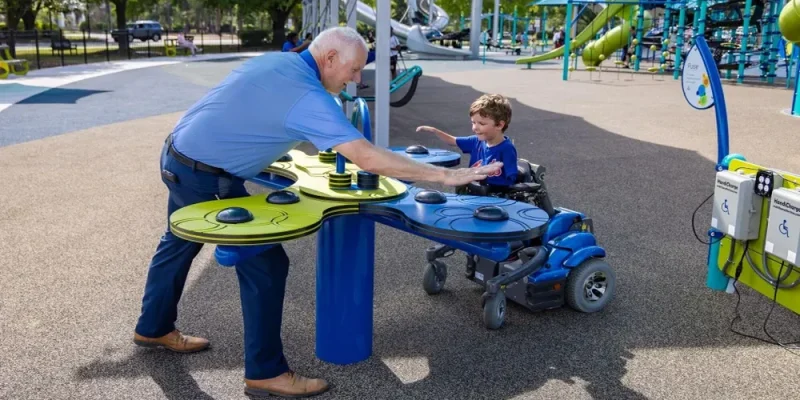
A child approaches a play structure, eyes bright with anticipation, only to stop short at the first step their wheelchair cannot climb. This scene should belong to the past, yet it remains a reality in far too many communities. Building playgrounds that welcome everyone is not just a matter of fairness; it is a matter of creative design, legal responsibility, and collective willpower.
The Challenge of Creating Truly Inclusive Playgrounds
Understanding Accessibility Barriers in Play Spaces
Traditional playgrounds often assume every child moves, communicates, and perceives the world in the same way. Physical barriers like stairs, high platforms, and loose surfacing instantly exclude those with mobility devices. Sensory overload from bright colors and constant noise can overwhelm kids with sensory processing disorders. Even communication, often taken for granted, can be a major hurdle for non-verbal children.
Why Do Traditional Playgrounds Exclude Many Users?
Most play areas were not designed around the concept of universal access. Instead, they focused on general enjoyment without considering diverse needs. The result? Children with disabilities are sidelined, and families are left searching for alternatives or staying home altogether.
The Importance of Inclusive Play for Child Development
Play is not just recreation, it is a laboratory for social skills, problem-solving, and self-confidence. For children with disabilities, exclusion from play means missing out on opportunities that shape cognitive, emotional, and physical growth. An inclusive playground empowers all children to interact, learn, and grow together.
Key Accessibility Features That Make Playgrounds Inclusive
Ground Surfaces: Safe and Navigable for All Mobility Types
A playground’s foundation matters as much as its structures. Surfaces like poured-in-place rubber or interlocking tiles ensure that wheelchairs, walkers, and strollers can roll freely. Unlike loose gravel or mulch, these surfaces offer safety and stability for everyone.
Adaptive Play Equipment for Diverse Physical Abilities
Ramps with gentle slopes allow access to elevated play zones. Swings with harnesses, transfer platforms, and accessible slides open up play options for children with limited mobility. Equipment that can be enjoyed from a seated or standing position ensures no one is left out.
Sensory Play Elements for Children with Sensory Processing Needs
Features that engage multiple senses, musical panels, textured paths, water features, and quiet spaces, offer stimulation or calm as needed. Carefully selected sensory elements help avoid overwhelming children and make the environment more enjoyable for those with sensory sensitivities.
Communication Boards and Visual Aids for Non-Verbal Users
For some children, words are not the best, or only, way to communicate. Communication boards, picture symbols, and visual schedules enable non-verbal users to express themselves, participate in play scenarios, and interact with peers. These features can be transformative for social inclusion.
Shade and Rest Areas Designed for Comfort and Accessibility
Exposure to sun can be a safety risk, especially for those who cannot regulate their body temperature easily. Shade structures and benches at accessible heights provide space to rest, recharge, and participate from the sidelines if needed.
Designing for Cognitive and Social Inclusion
Incorporating Elements That Encourage Social Interaction
Inclusive playgrounds foster group play, teamwork, and cooperation. Games that require more than one participant, communal musical instruments, and group swings break down social barriers and cultivate friendships.
Designing Play Structures for Various Cognitive Levels
Cognitive inclusion means offering challenges for all ages and abilities. Clear signage, color-coded pathways, and step-by-step play panels accommodate different learning styles and comprehension levels.
Multisensory Experiences to Engage Different Learning Styles
A blend of tactile, visual, and auditory experiences caters to unique learning preferences and keeps every child engaged, regardless of how they process information best.
Legal Standards and Guidelines to Inform Playground Accessibility
Overview of Ontario’s AODA and Similar Accessibility Laws
In Ontario, the Accessibility for Ontarians with Disabilities Act (AODA) sets out standards for accessible public spaces, including playgrounds. Similar laws exist throughout North America, shaping requirements for surfacing, routes, and play equipment.
Meeting and Exceeding Compliance Requirements
Meeting minimum standards is not enough. Exceeding guidelines, by consulting with families, using universal design, and testing prototypes, creates playgrounds that serve everyone better.
The Role of Universal Design Principles
Universal design is about creating environments usable by all, to the greatest extent possible, without adaptation. Playgrounds built on these principles are inherently more inclusive.
Overcoming Common Design and Budget Challenges
Balancing Cost with Comprehensive Accessibility Features
The perception that inclusion comes with prohibitive costs is often misguided. Strategic planning, creative reuse of materials, and phased implementation help maximize value within budget constraints.
Collaborating with Experts and Community Stakeholders
Input from occupational therapists, accessibility consultants, and local families leads to smarter design decisions. Community engagement ensures the final space truly meets users’ needs.
Innovative Materials and Technologies That Enhance Accessibility
Advances in surfacing materials, modular equipment, and interactive technologies continue to push the boundaries of what’s possible for inclusive play.
Implementing and Maintaining Inclusive Playgrounds
Steps for Planning and Community Engagement
Successful projects start with assessing community needs, developing a clear vision, and fostering buy-in from all stakeholders.
Training Staff and Caregivers on Accessibility Features
Even the best-designed playground can fall short if staff are unaware of its features. Regular training empowers caregivers to guide children in using adaptive equipment and communication tools.
Routine Maintenance to Ensure Long-Term Accessibility
Consistent upkeep of surfaces, equipment, and signage preserves accessibility and safety for years to come.
Inspiring Examples of Successful Inclusive Playgrounds
Playgrounds across Ontario and beyond are proving that true inclusion is achievable. By prioritizing adaptive features and universal design, spaces once deemed “special needs” are now simply “everyone’s playground.” Companies like Inspire Playgrounds offer valuable resources and inspiration for communities aiming to build accessible play environments.
Taking Action: How Communities Can Advocate for Inclusive Play Spaces
Every community can begin with a playground audit, identifying barriers and opportunities for improvement. Mobilizing local support, seeking grants, and partnering with designers and experts make inclusion a shared mission. With persistence and collaboration, we can ensure playgrounds where every child, regardless of ability, is free to play, explore, and belong.










Comments