
 By
By 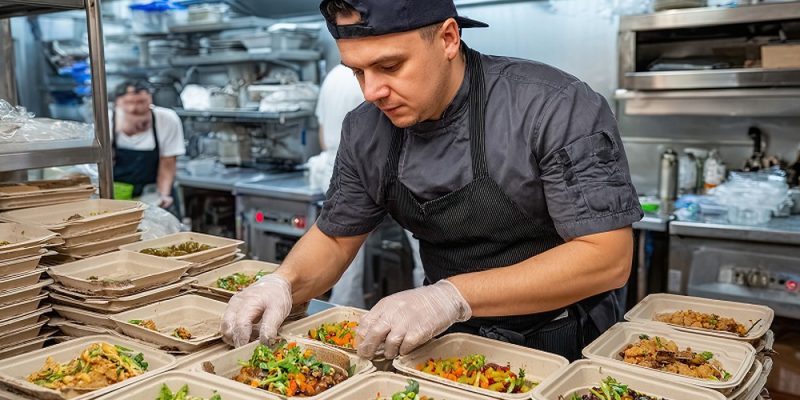
Key Takeaways
- A bento-style catering menu relies on strict planning, portion control, and timing discipline.
- Ingredient sourcing and prep are standardised to maintain consistency across large orders.
- Assembly lines are used to ensure speed, accuracy, and uniform presentation.
- Food safety, packaging, and delivery logistics are tightly coordinated.
- Quality control checks happen at multiple stages before dispatch.
Introduction
A bento-based catering menu may look simple from the outside, but its preparation involves a structured and time-sensitive workflow. Unlike buffet setups, where adjustments can be made on-site, bento catering requires every component to be finalised before delivery. This instance means catering teams must operate with precision across procurement, preparation, assembly, and logistics. Knowing what happens behind the scenes highlights why consistency, timing, and operational discipline are critical to delivering a reliable bento experience.
Ingredient Planning and Procurement
Preparation begins with forecasting order volume and confirming the final catering menu. Each bento set is broken down into individual components-protein, vegetables, carbohydrates, and sides. From there, procurement teams calculate exact quantities required, often with minimal buffer to control cost and reduce waste. Suppliers are selected based on reliability and the ability to deliver consistent quality in bulk. Perishable ingredients are scheduled for just-in-time delivery to maintain freshness. This stage also includes contingency planning, such as backup suppliers or substitute ingredients, to avoid disruptions.
Standardised Food Preparation
Once ingredients arrive, kitchen teams follow pre-defined recipes and portion guidelines. Standardisation is essential in bento catering because every box must match in taste and quantity. Preparation is often divided into stations, with separate teams handling proteins, vegetables, and starches. Cooking is done in controlled batches to maintain consistency, especially for items that can lose texture or flavour if overproduced. Timing is carefully managed so that all components are ready for assembly within a specific window, reducing holding time and preserving quality.
Assembly Line Operations
The assembly stage is where efficiency becomes critical. Catering teams typically set up a production line, with each staff member responsible for adding a specific component to the bento box. This system allows hundreds or even thousands of identical meals to be packed within a short timeframe. Portion control tools, such as pre-measured scoops and trays, are used to ensure uniformity across the catering menu. Visual guides or sample boxes are often placed along the line to maintain consistency in layout and presentation.
Packaging and Food Safety Controls
Packaging is not just about appearance; it plays a key role in food safety and transport stability. Each bento container is selected based on its ability to retain heat, prevent leakage, and separate different food items. Once packed, boxes are sealed and labelled, especially if dietary variations are involved. Food safety protocols are enforced throughout, including temperature checks and hygiene standards. Items are either kept warm in insulated carriers or chilled, depending on the menu design, to ensure they remain safe for consumption upon arrival.
Logistics and Delivery Coordination
Delivery planning is integrated into the preparation process. Routes are mapped based on distance, traffic conditions, and delivery time windows. The catering menu schedule is aligned with dispatch timing to minimise delays between packing and arrival. Drivers are briefed on handling instructions, especially for large orders where stacking or movement could affect presentation. For instance, for high-volume events, staggered deliveries or multiple vehicles may be deployed to maintain punctuality and food quality.
Final Quality Checks Before Dispatch
A final inspection is conducted before orders leave the kitchen. Teams verify order quantities, check for completeness of each bento set, and ensure packaging integrity. Random boxes may be opened for spot checks on portion accuracy and presentation. Any discrepancies are corrected immediately to avoid client complaints. Documentation, such as delivery checklists and labelling, is also reviewed to ensure smooth handover upon arrival.
Conclusion
Behind every bento catering menu is a coordinated system built on planning, standardisation, and timing. From sourcing ingredients to final delivery, each stage is designed to reduce variability and maintain consistency at scale. While the end product appears straightforward, the process behind it is structured and operationally intensive. This system is what allows catering providers to deliver uniform, reliable meals across events of any size.
Contact Elsie’s Kitchen to speak to a provider who can handle volume without compromising accuracy-so every box delivered reflects the standard you expect.







Comments